
InsideOut 01: Patios
This prototype is part of InsideOut Housing—a model we're testing to see if better apartments are possible.
The Patios housing concept fills the gap between the single home on a stand and the compact flat. It is an urban alternative to the cluster estate. The design proposition is that a flat can be adaptable, responsive and offer space for a family to grow in.
The unit is designed from the inside-out, prioritising comfort and liveability. It is in contrast to the cookie-cut ‘functional’ flat layout with a façade pasted onto it. Outside it offers communal family spaces - shared gardens and playgrounds – where neighbours rub shoulders. The construction minimises on material, promotes renewable resources and is inherently energy efficient through sensible design.
Designing from the Inside–Out
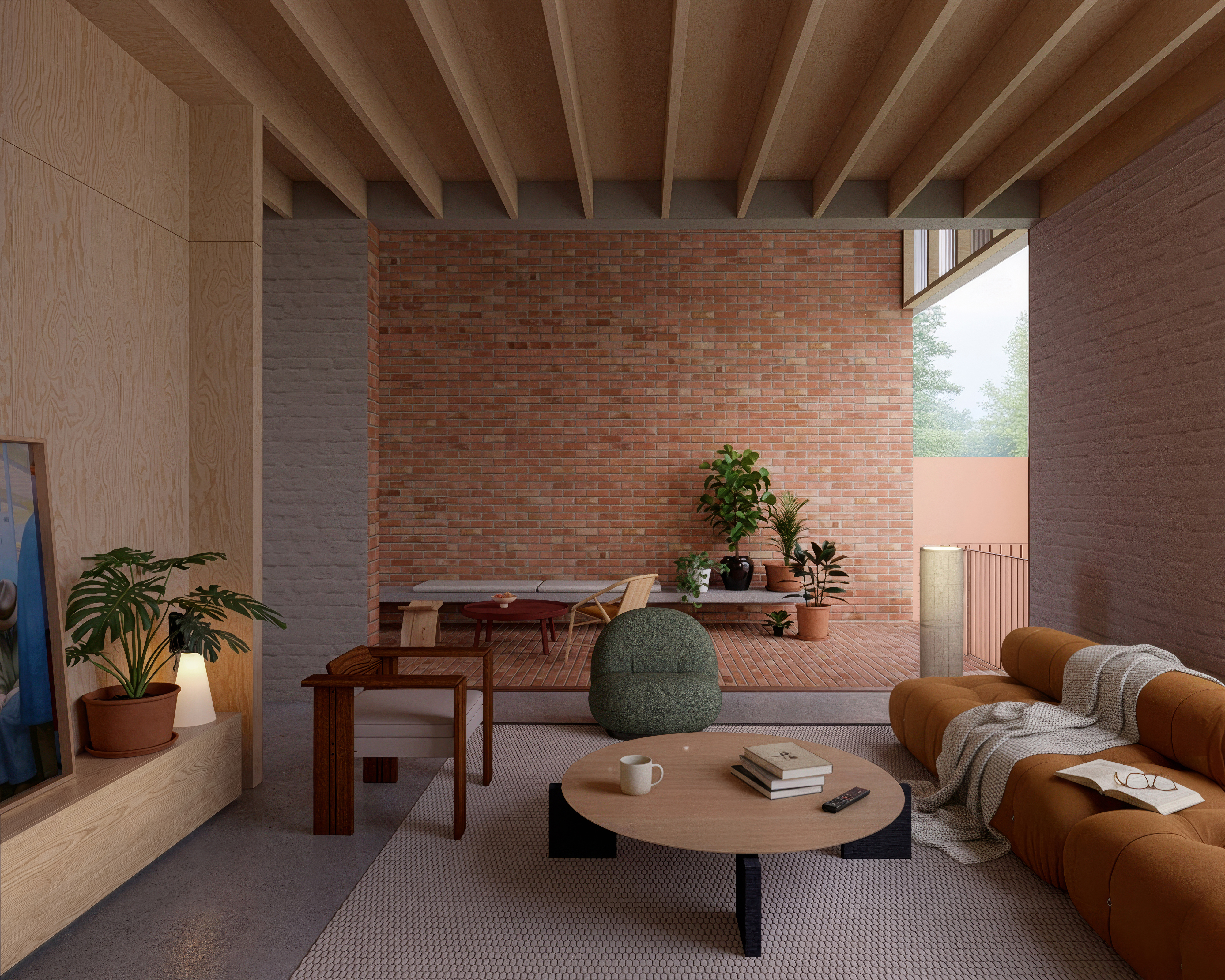
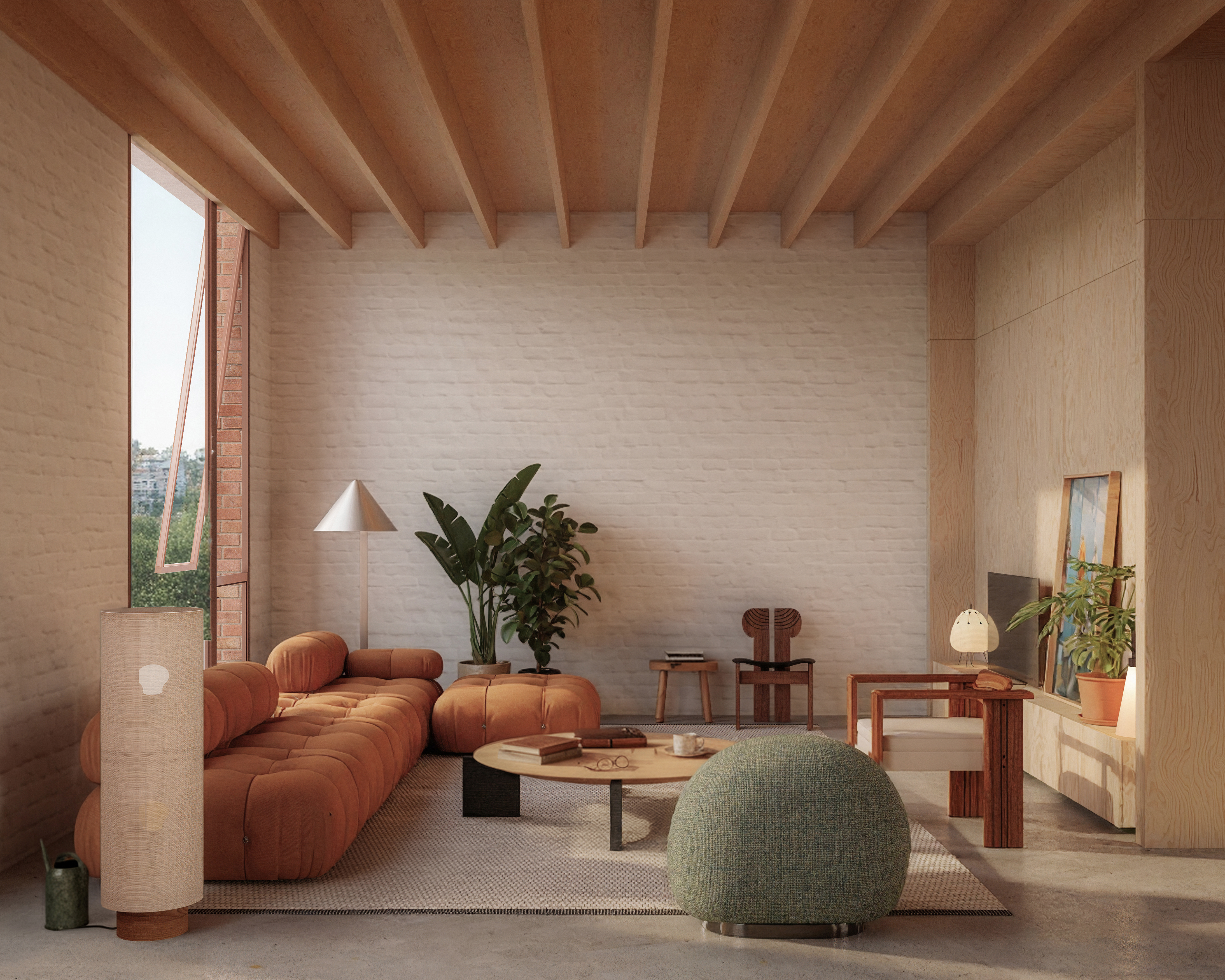
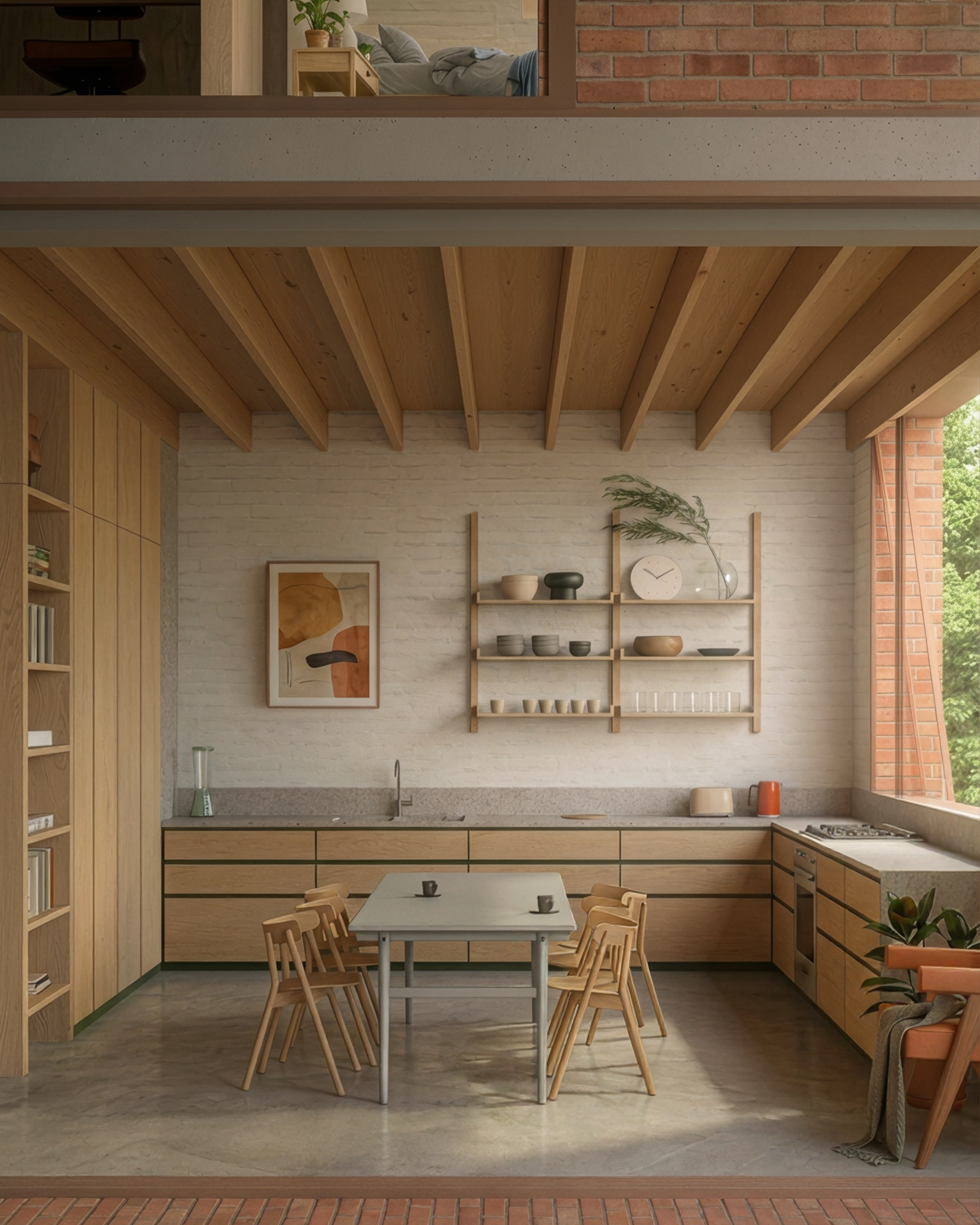
The umbrella concept Inside-Out Housing comes from our commitment to starting the design with how people live — looking at everyday rhythms: how a family might move through the space, how couples could host dinner parties, how multiple people can work and play in the home. How does light enter each space? Is there cross-ventilation and climate control? Rather than imposing fixed, generic layouts, we work carefully with constraints to arrive at solutions that feel calm, generous and a little bit special.
Shared Gardens
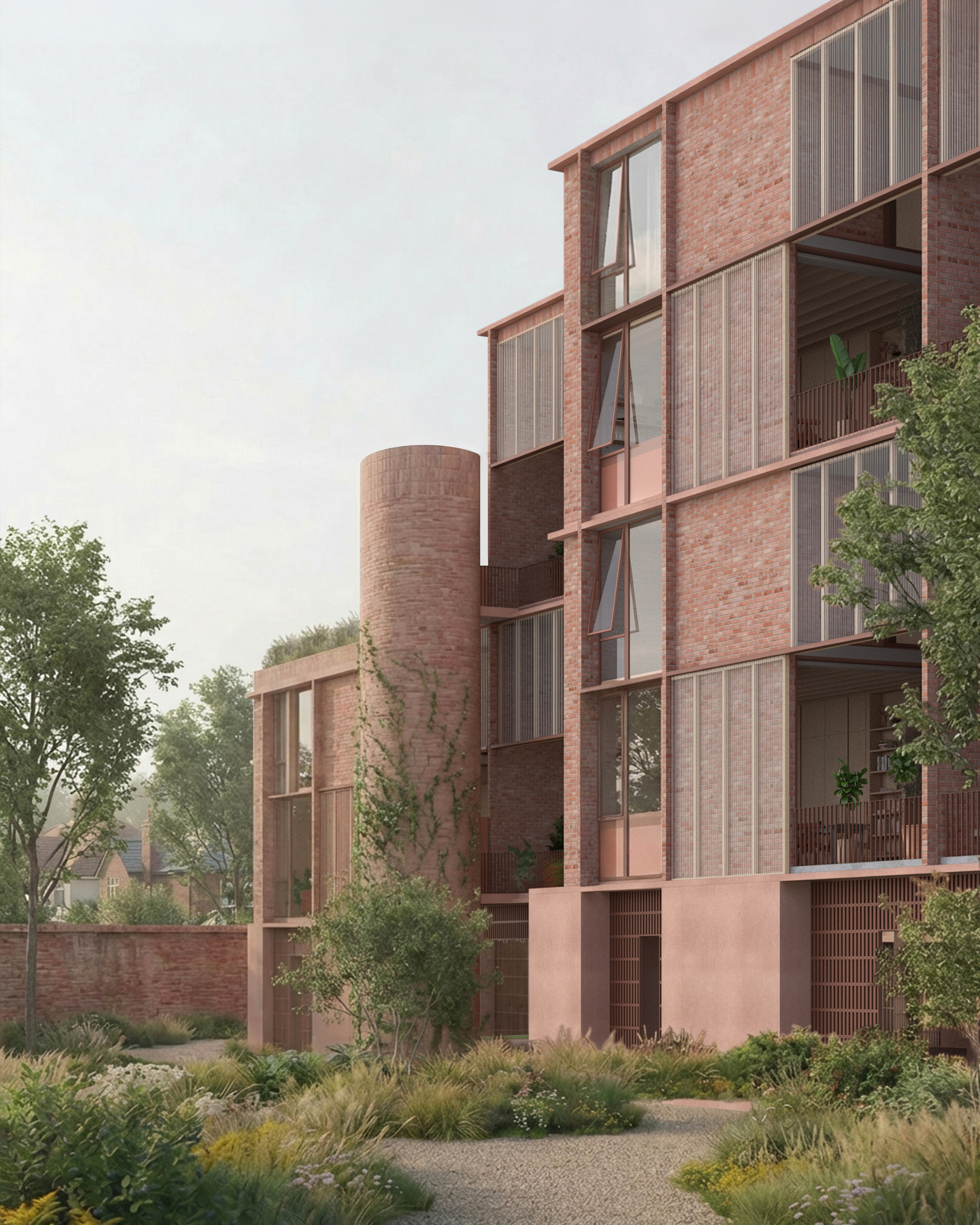
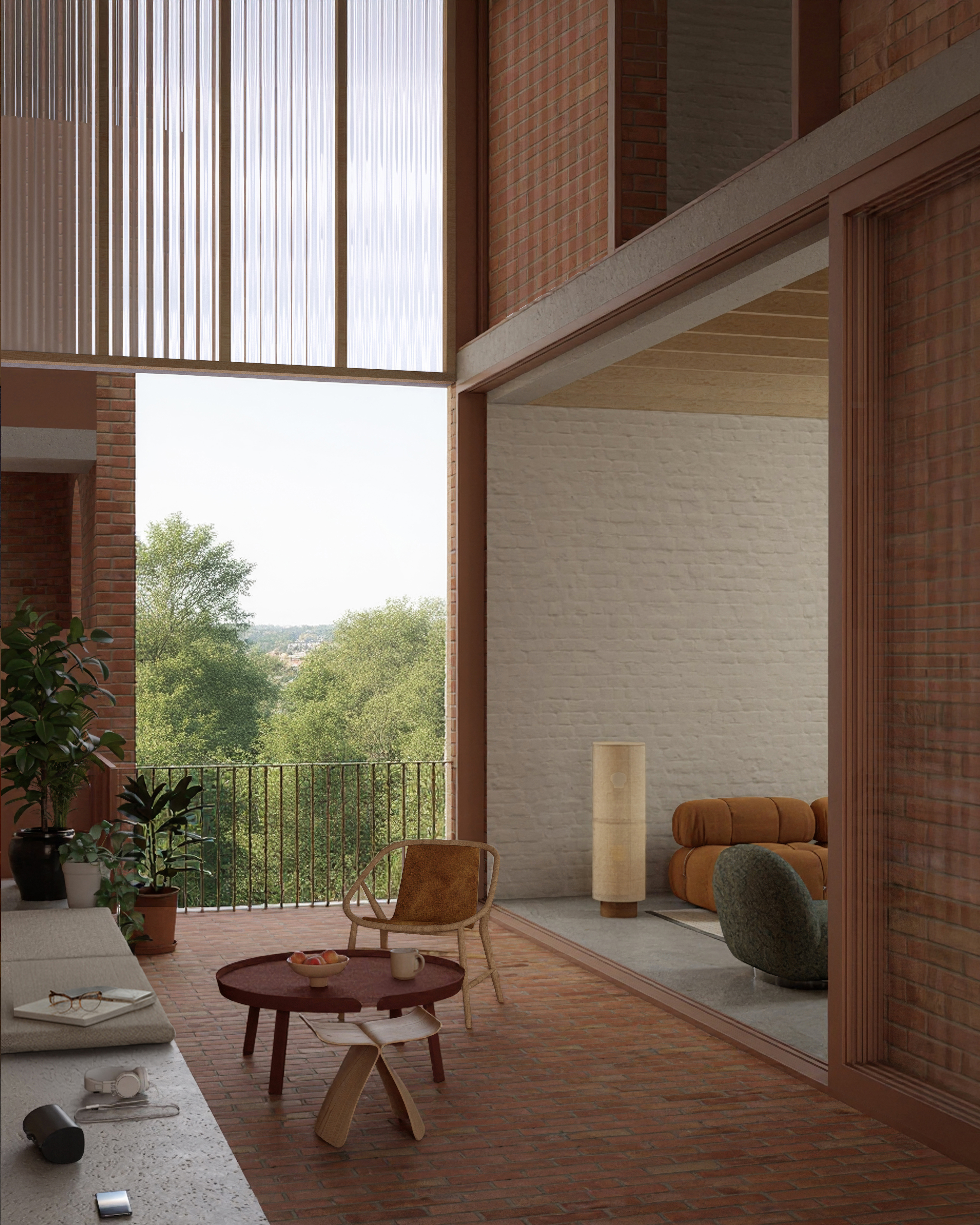
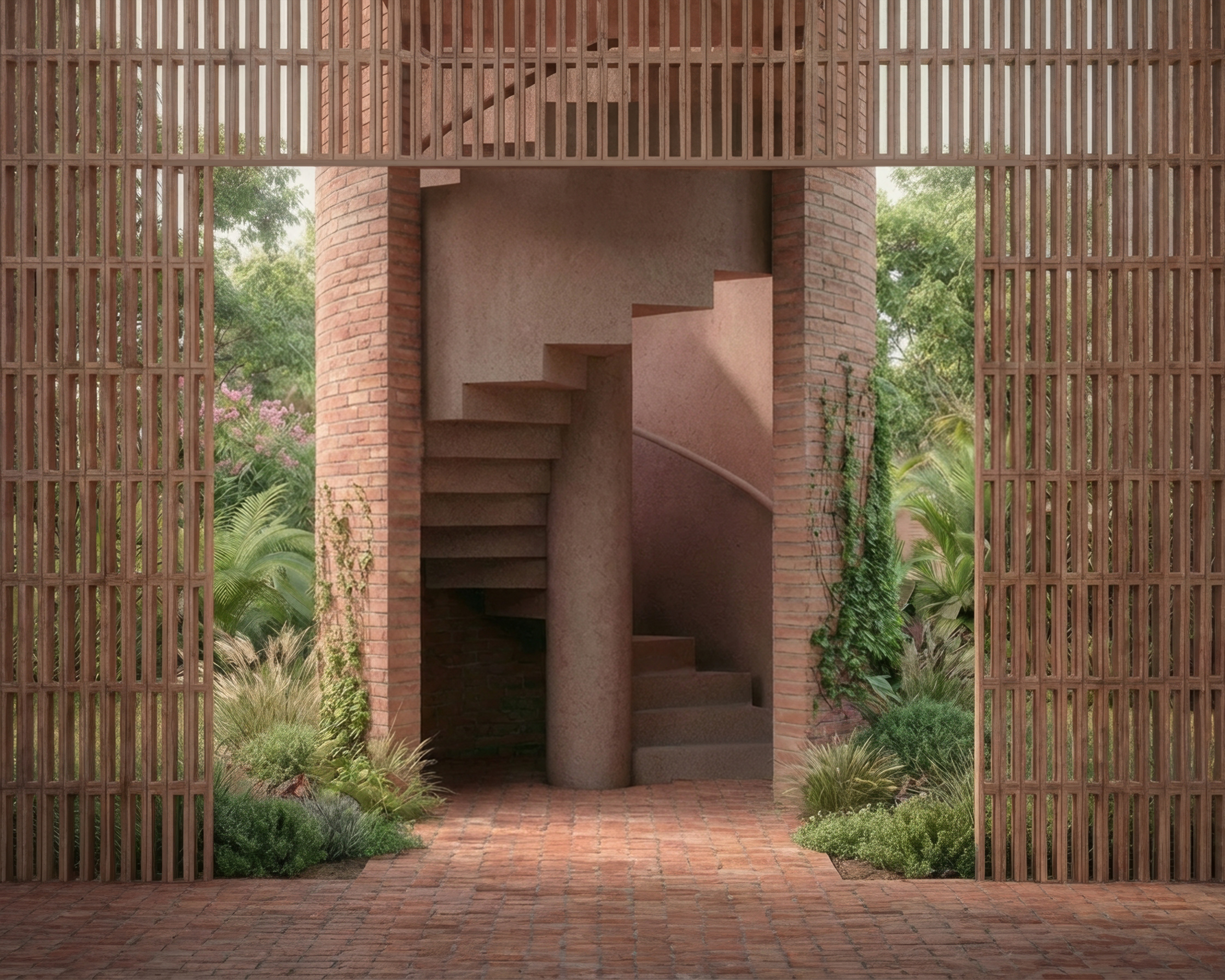
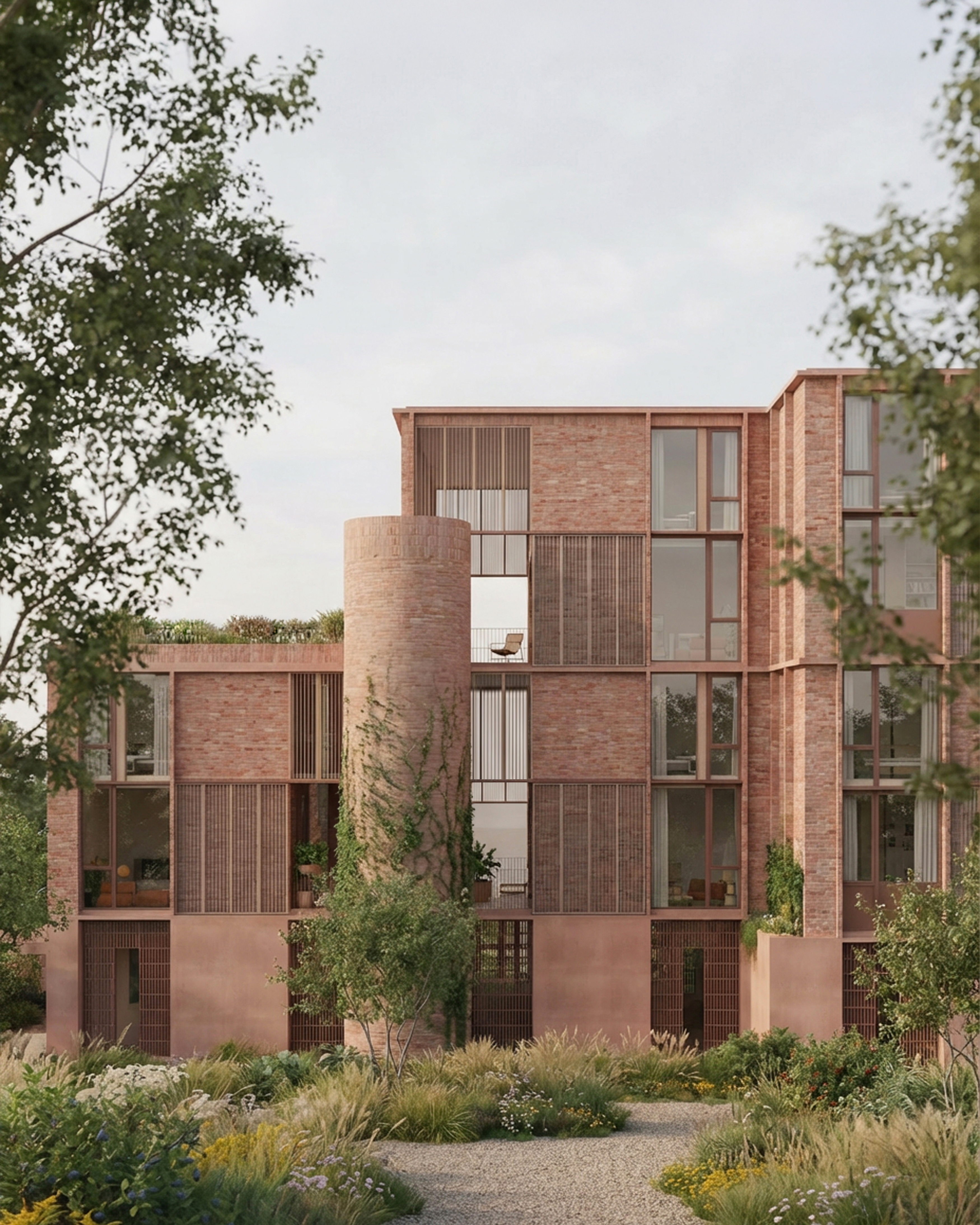
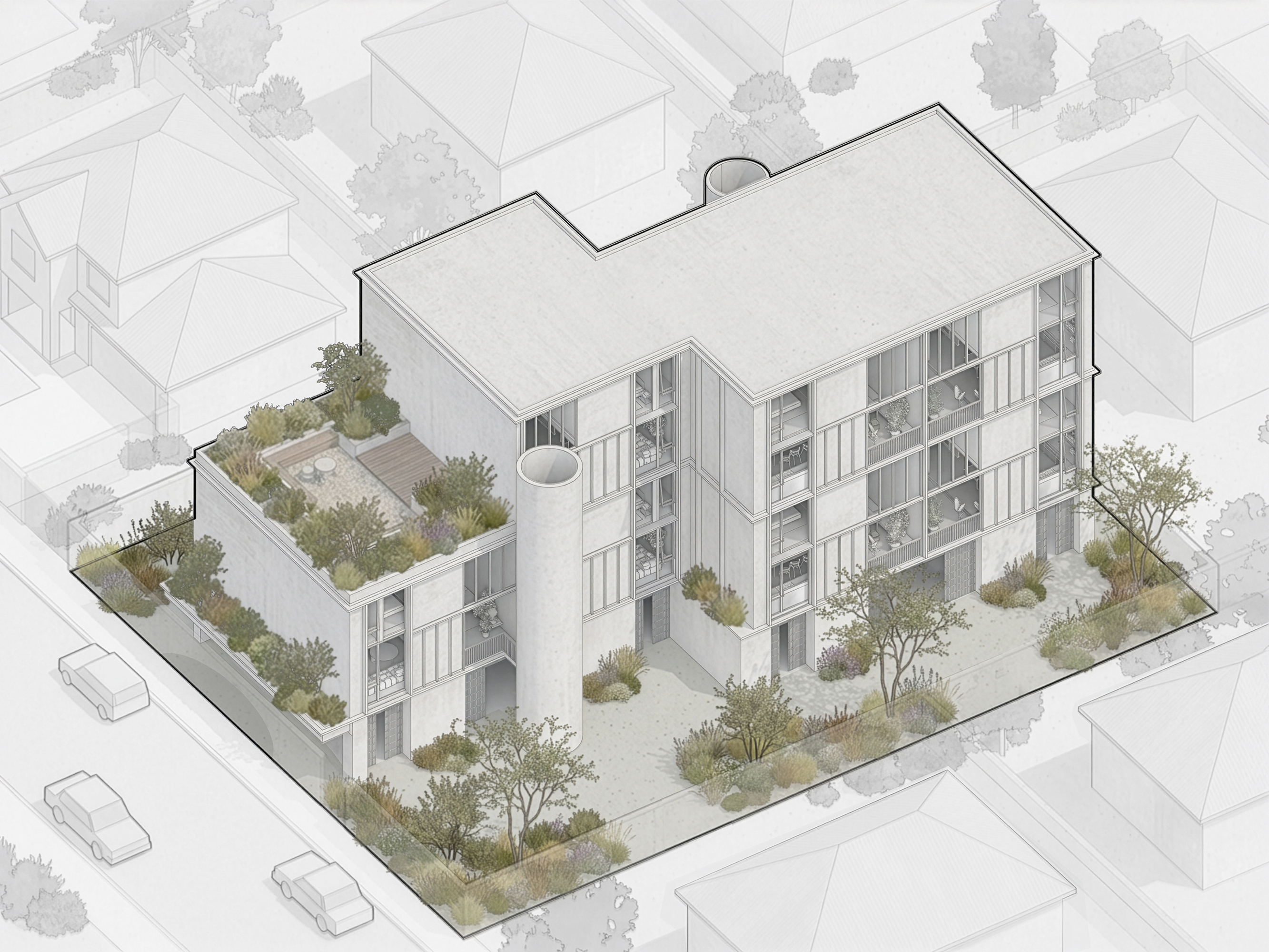
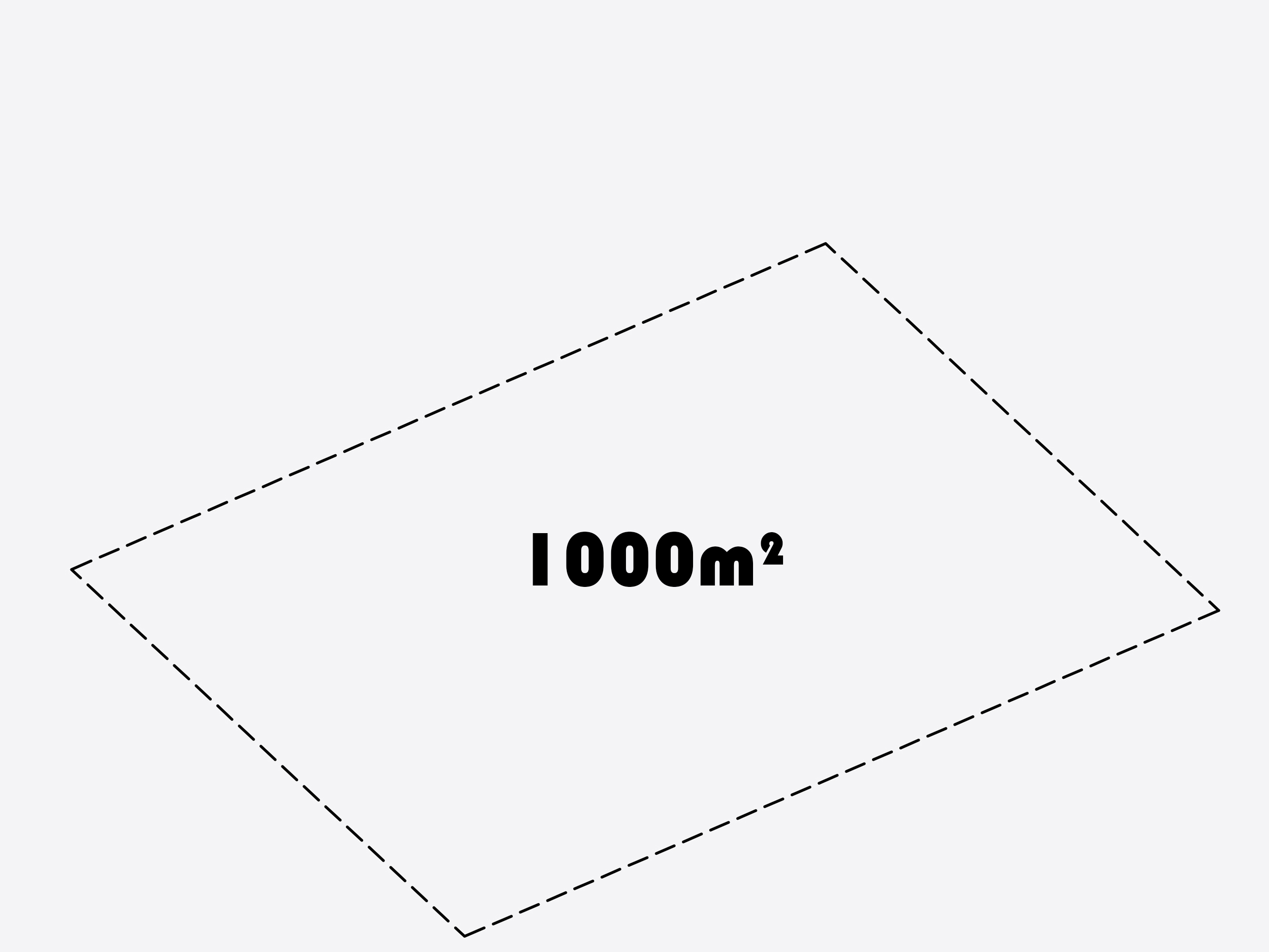
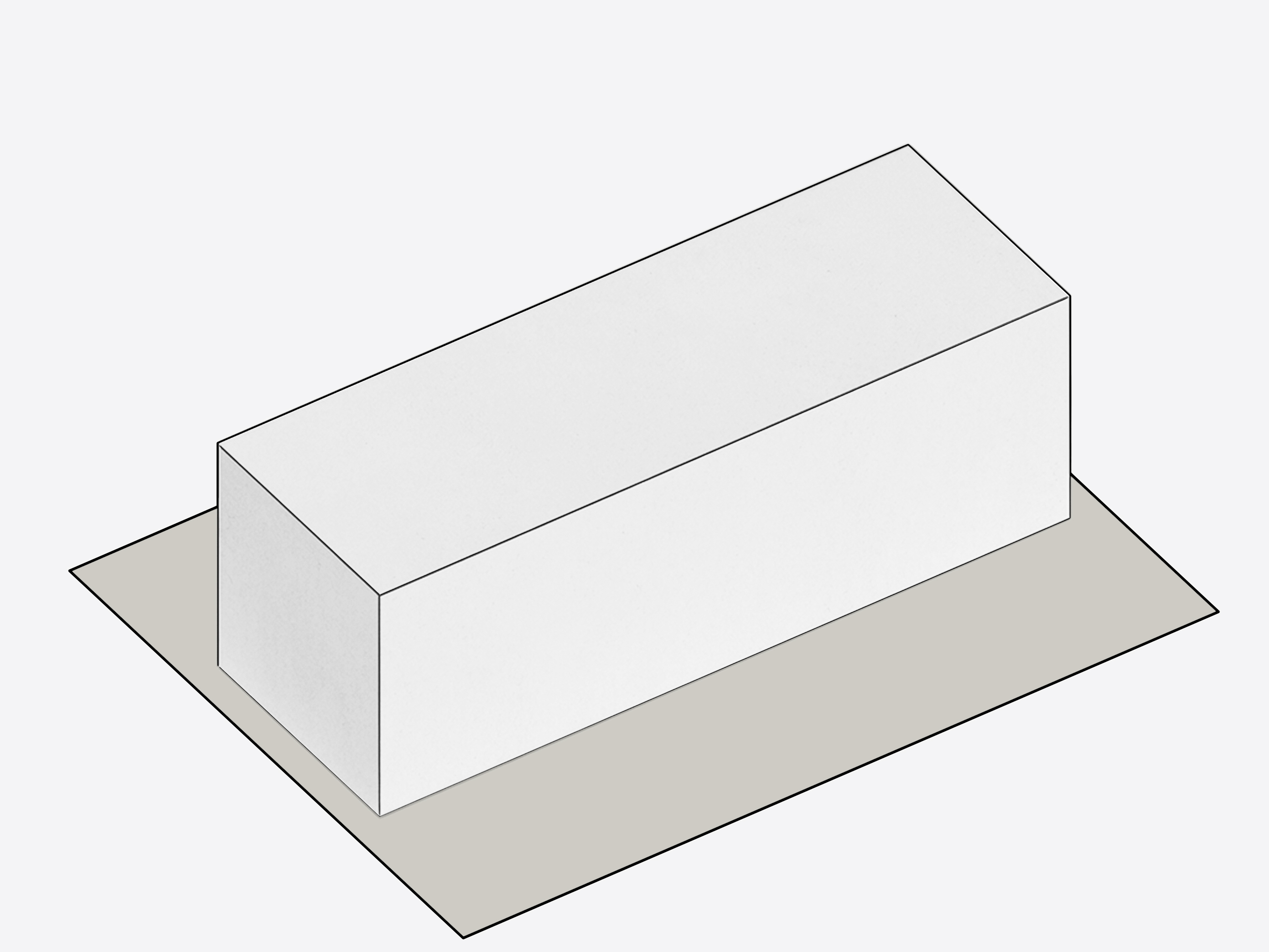
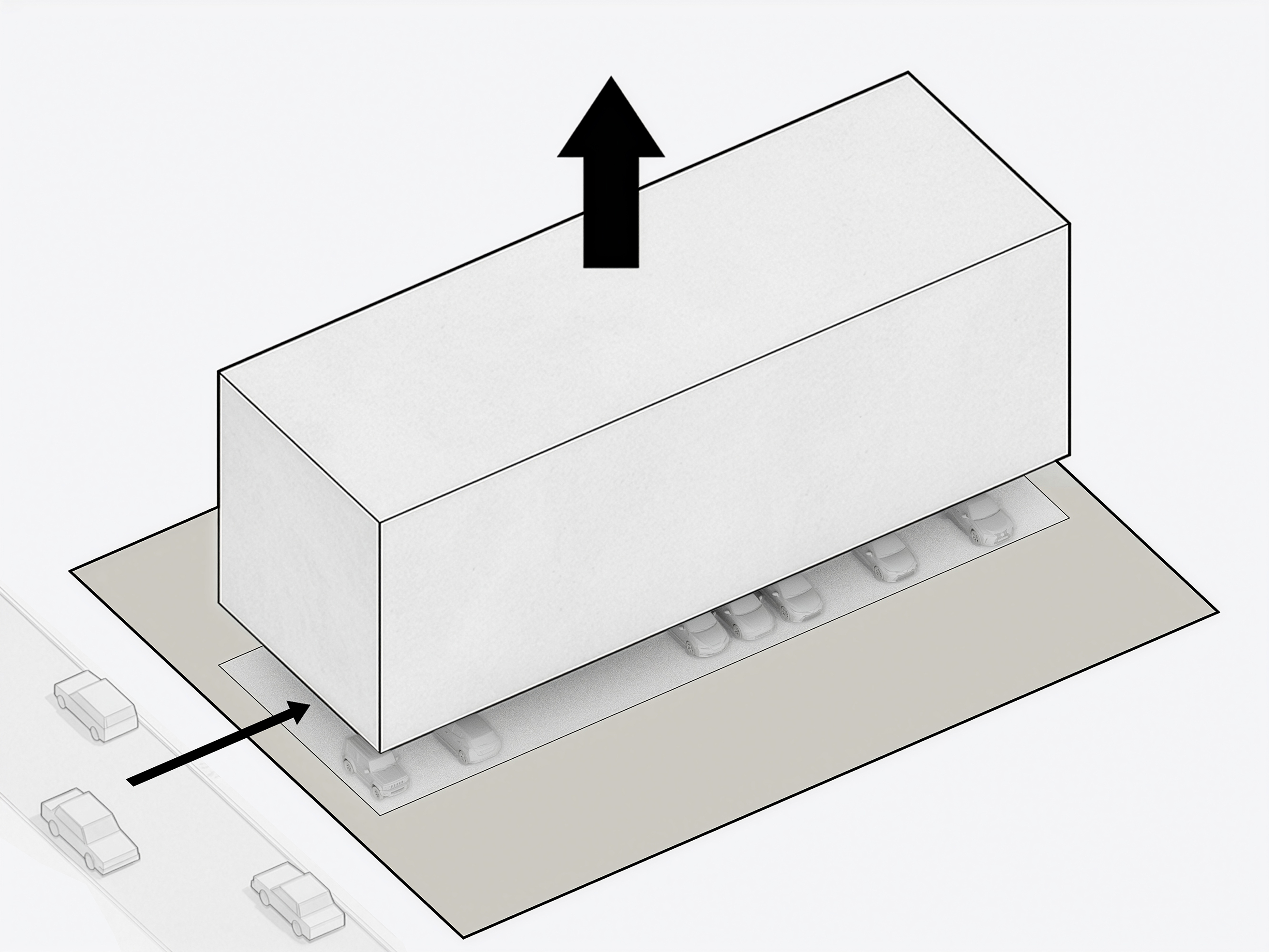
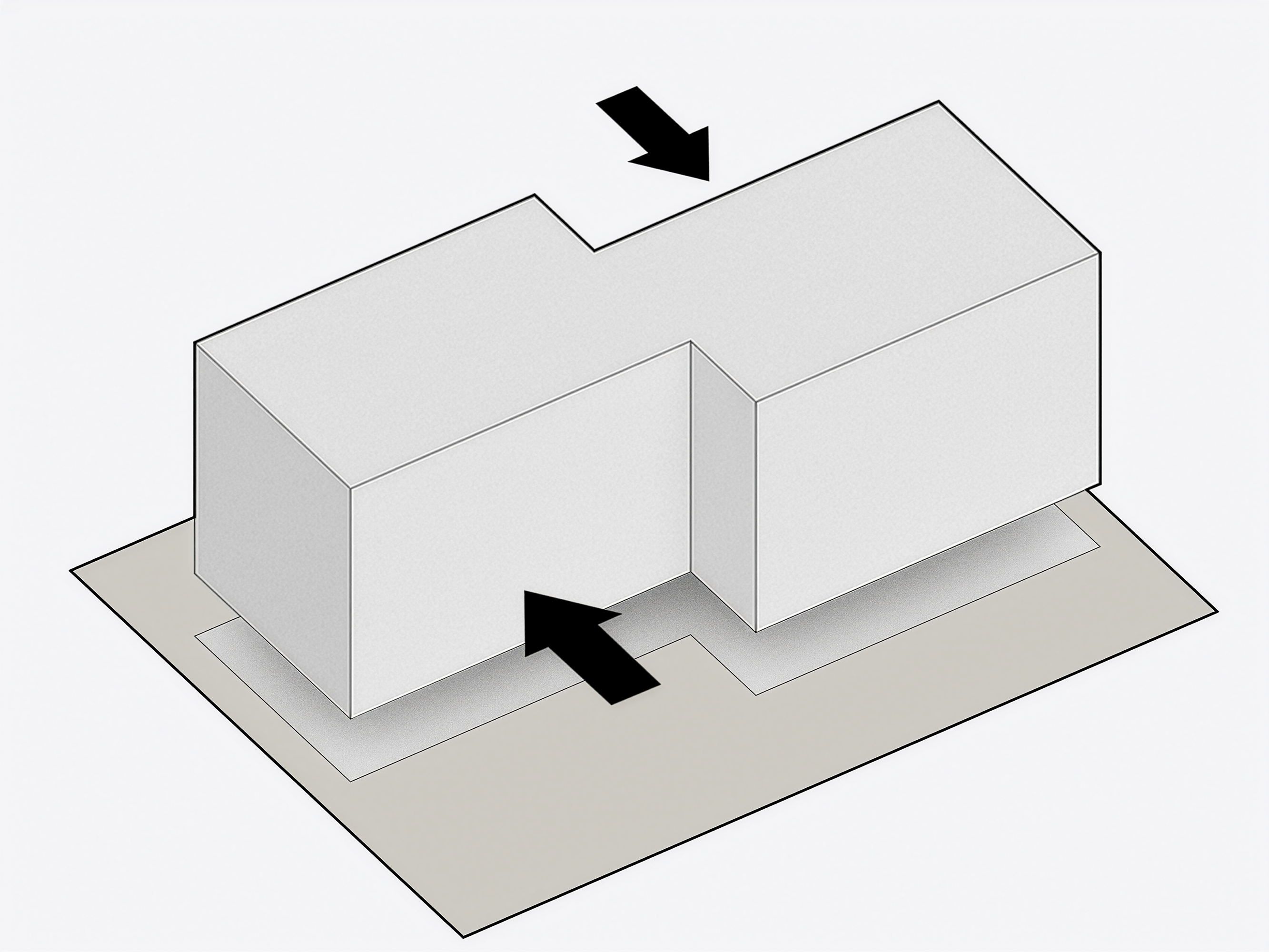
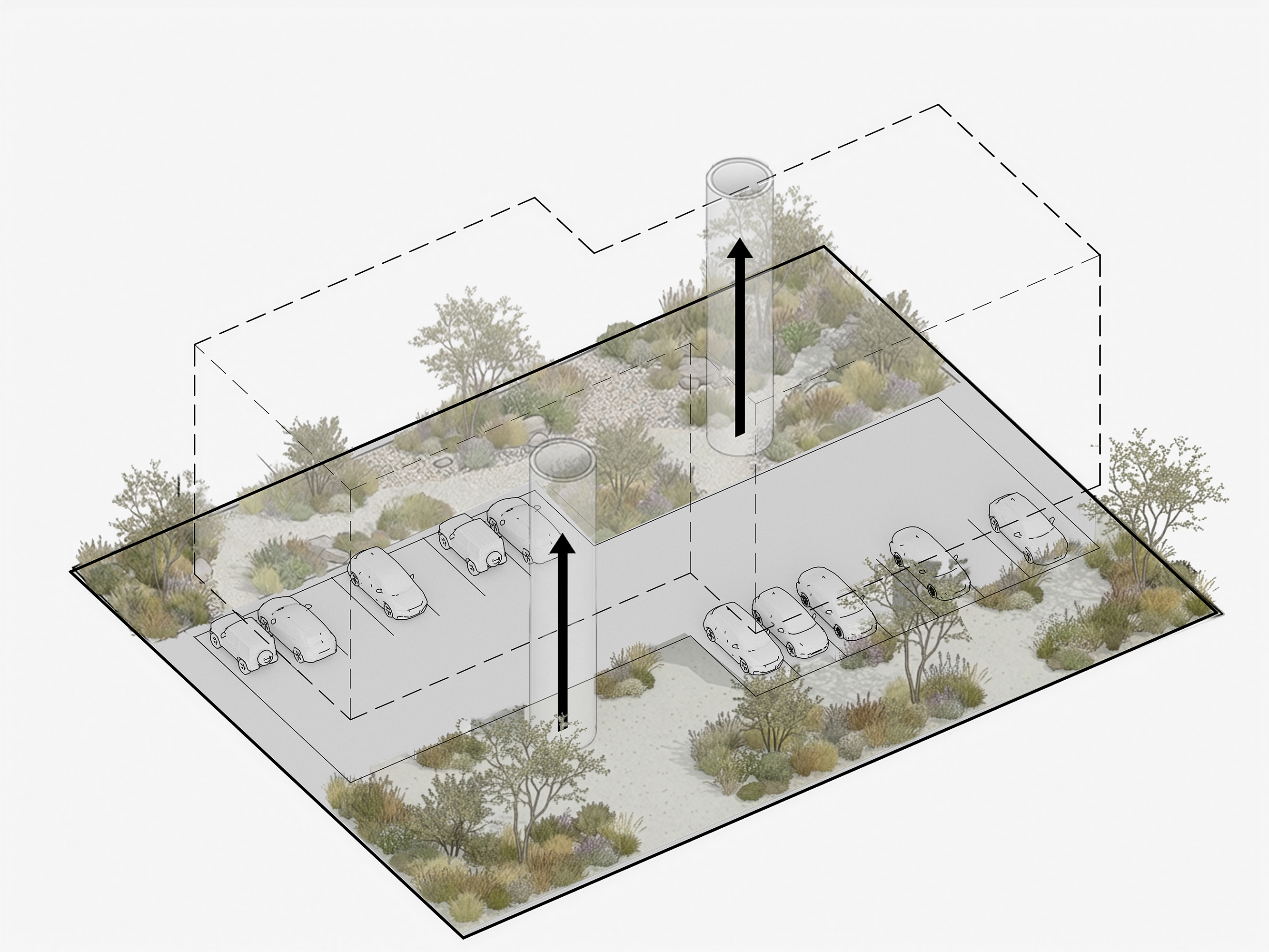
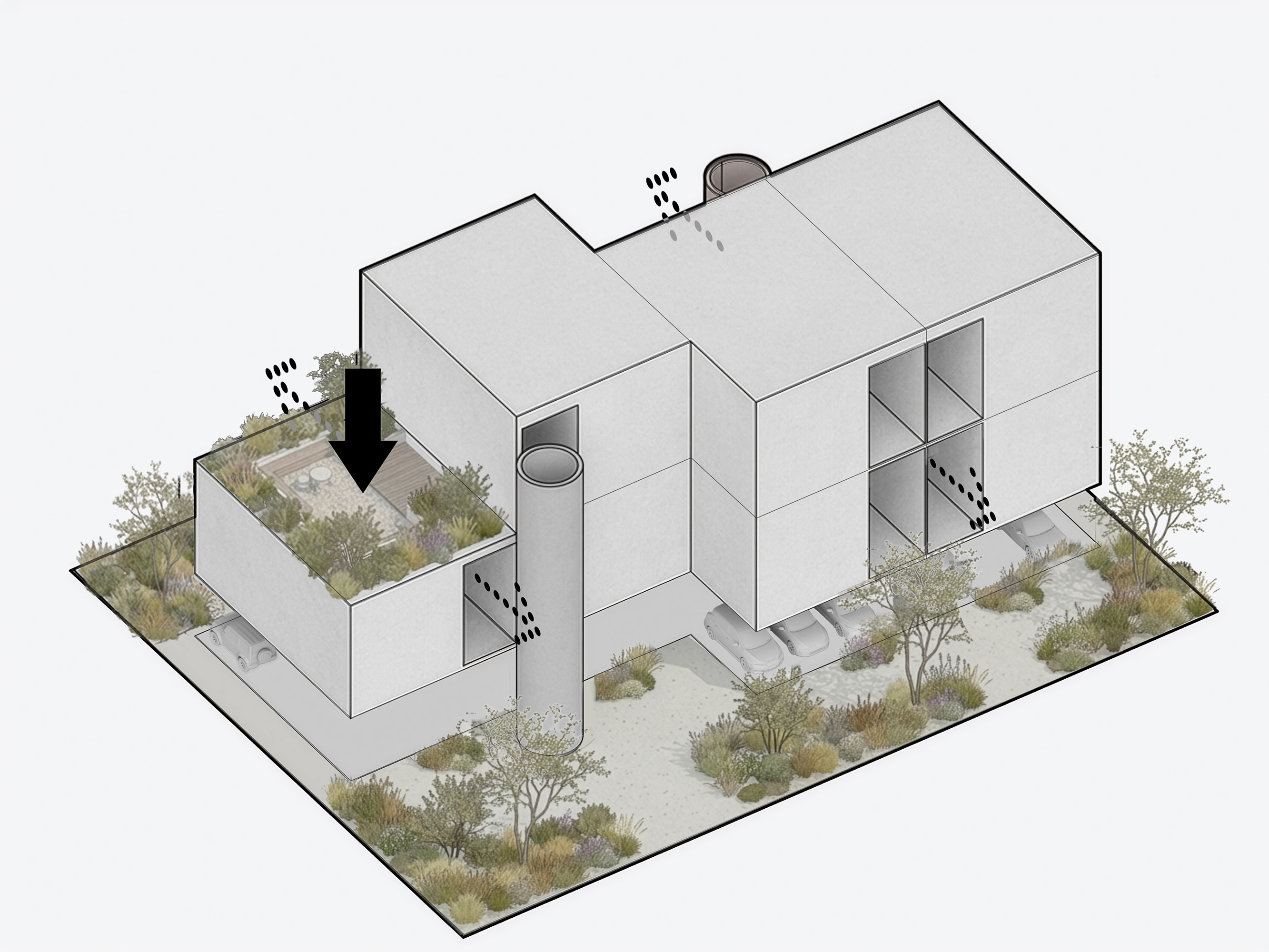
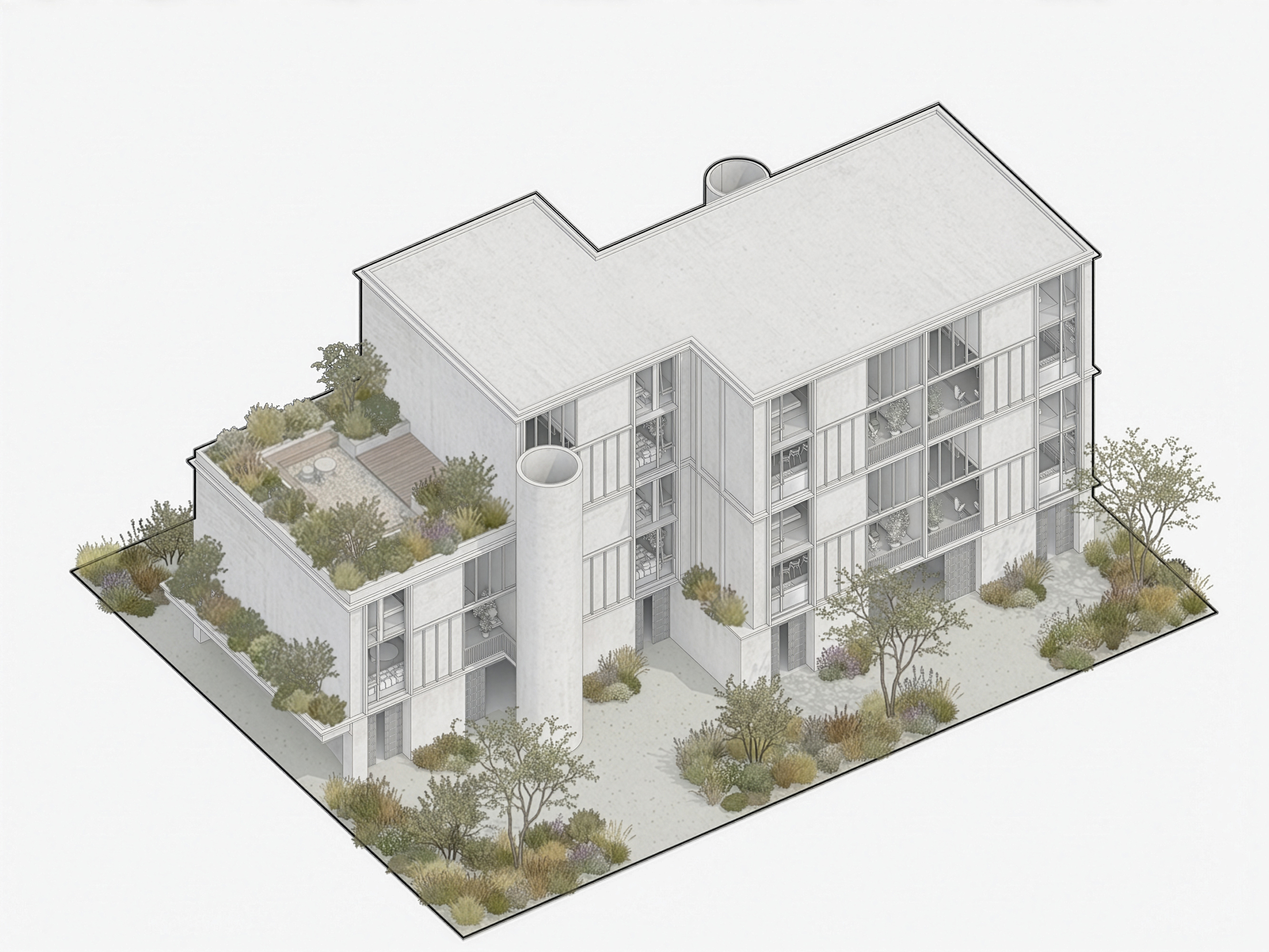
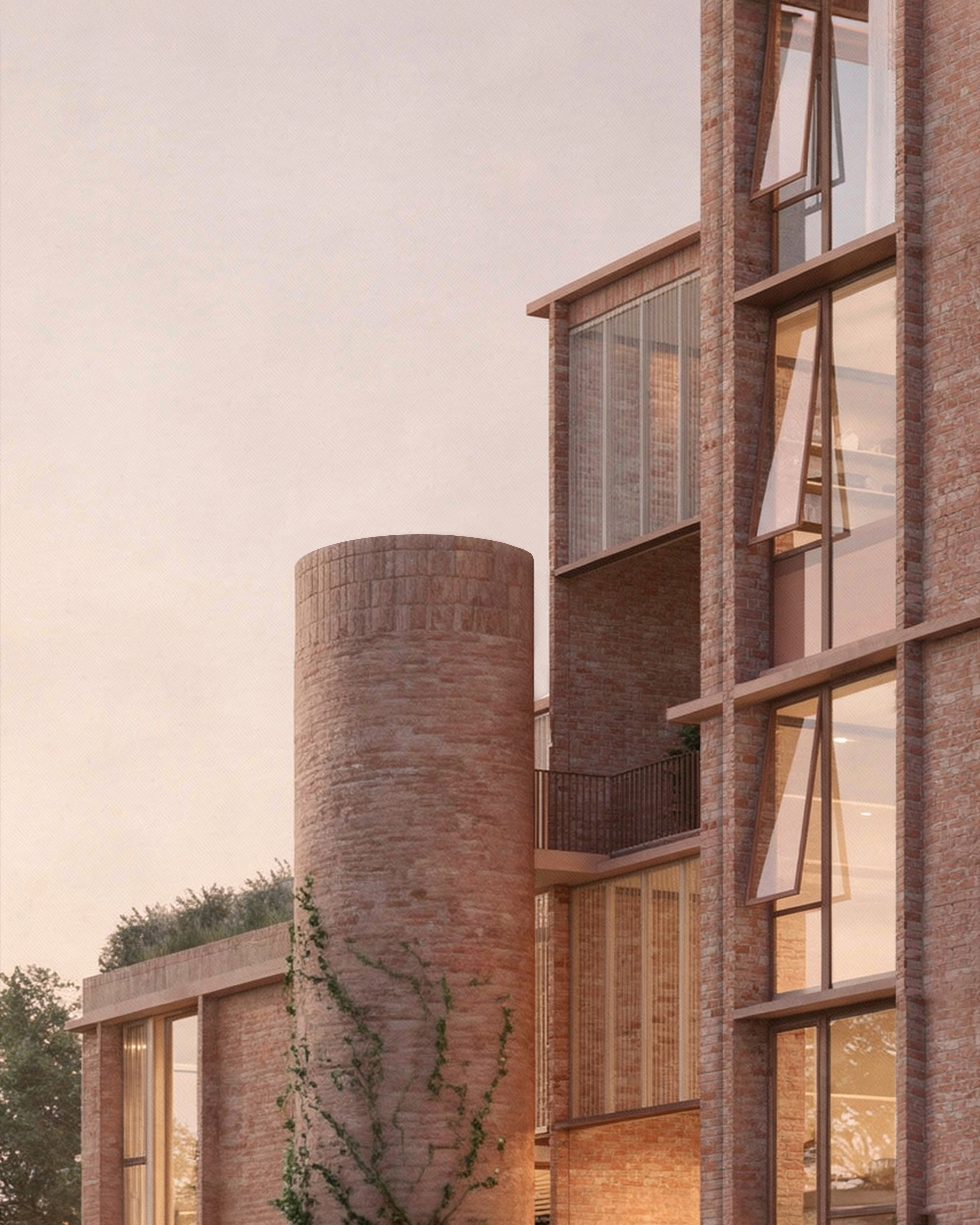
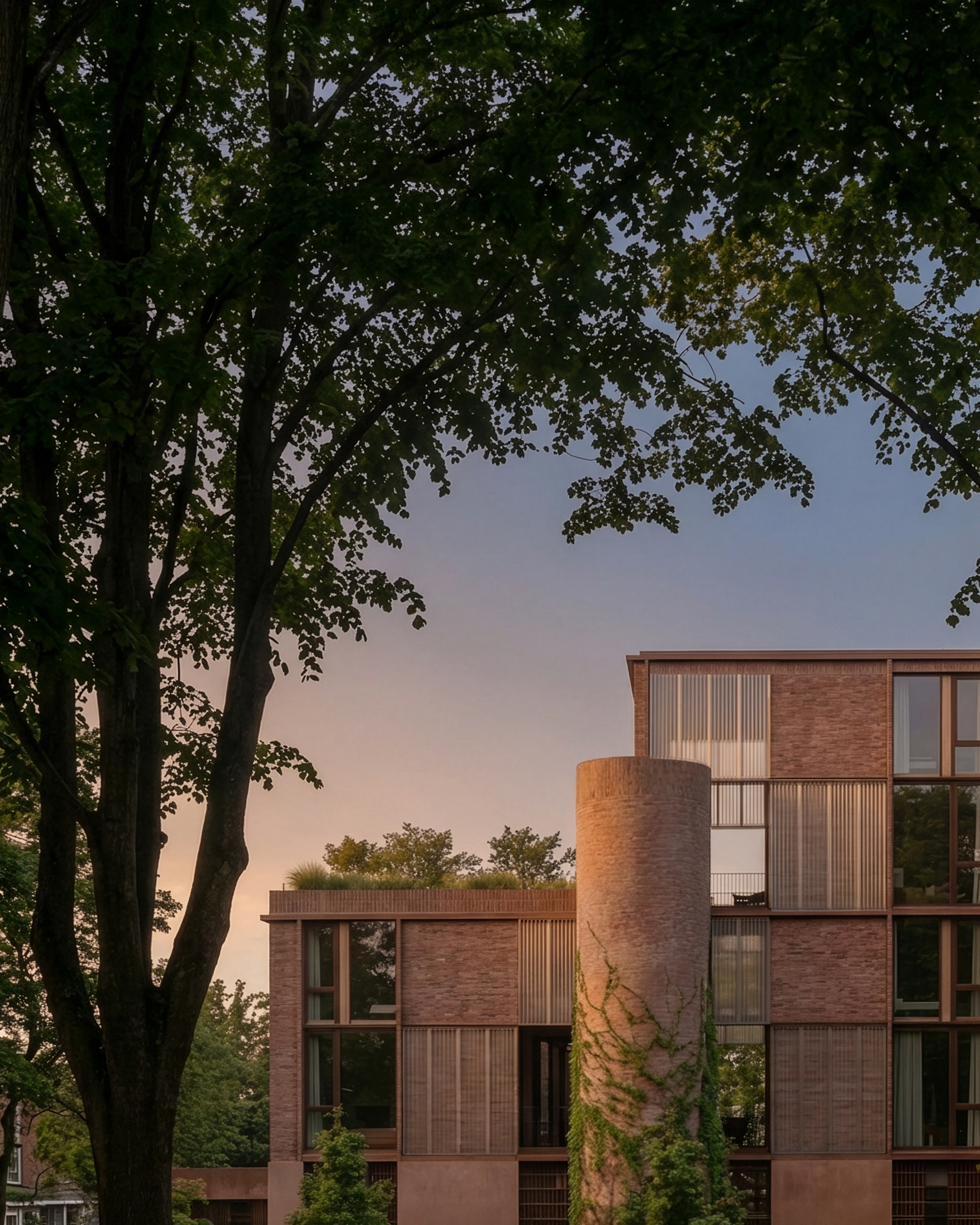
The gardens become an extension of each apartment. Parking is neatly tucked under the building, with the circular stair structures placed intentionally in the gardens to encourage use. The building is shaped to create space for gardens which bring light and air deep into the site while softening the space between the block and its neighbours. The shared landscape reinforces the project’s social intent, encouraging casual encounters whilst the stair cores maintain a clear sense of retreat into each apartment.
Safety Through Community
The project promotes safety through presence, visibility, and shared ownership. The shared garden, dual-aspect apartments, and generous openings create natural surveillance, where residents overlook common spaces as part of everyday life. This passive form of visual connection fosters a sense of collective responsibility and belonging. Further the design reinforces the idea that a well-used, well-loved environment is inherently more secure.
Light, Views, and gradation of Privacy
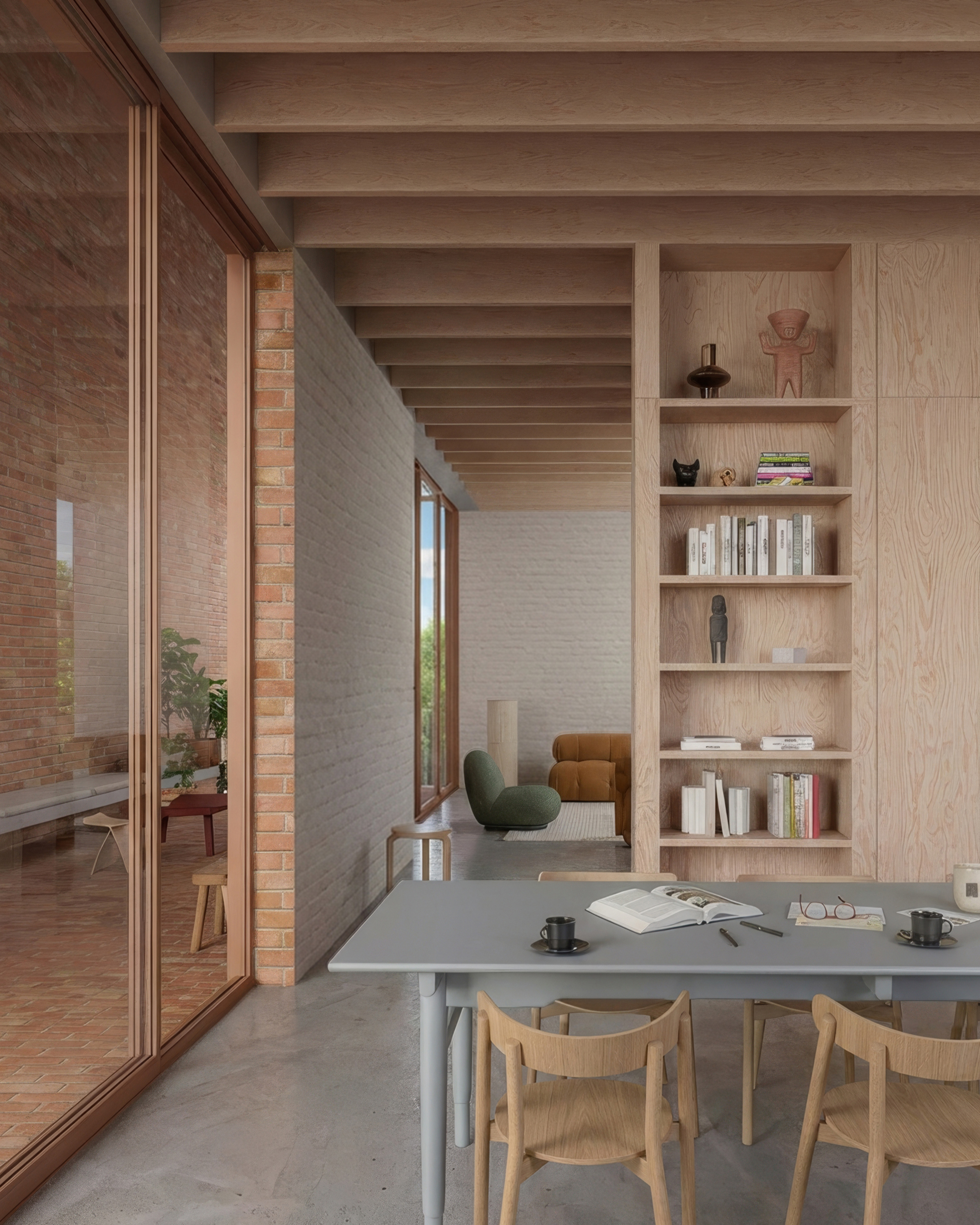
The block is organised without passages or internal walkways. Through thoughtful design, we’ve achieved direct access from the stair cores to each apartment while maintaining privacy. This strategy enables light, air and views to be drawn through the full width of each unit, with large sliding door openings on both sides. Despite this openness, privacy is preserved through careful positioning and orientation of the units — allowing residents to experience both outlook and enclosure at once.
Structure and Carbon-Conscious Construction
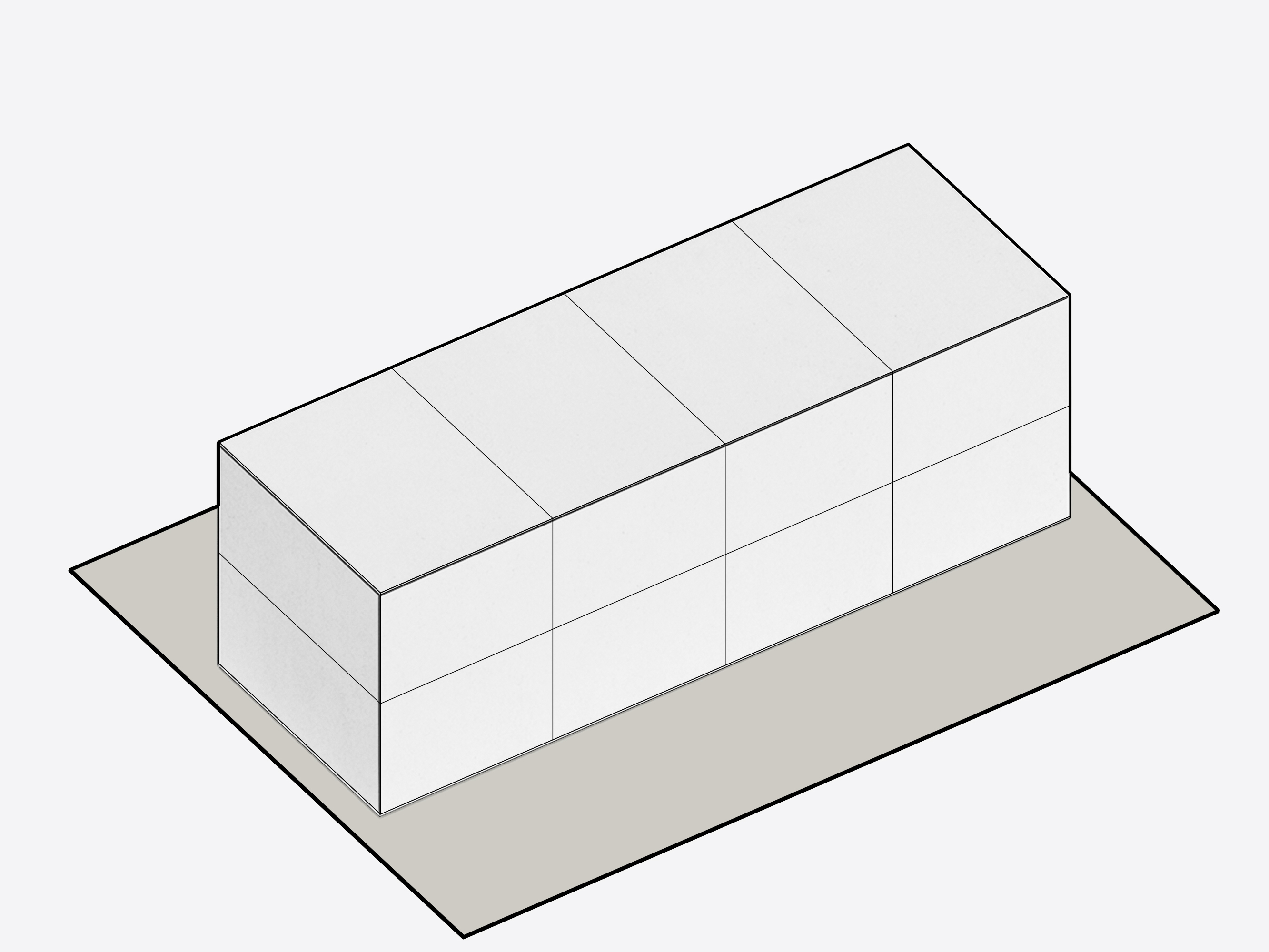
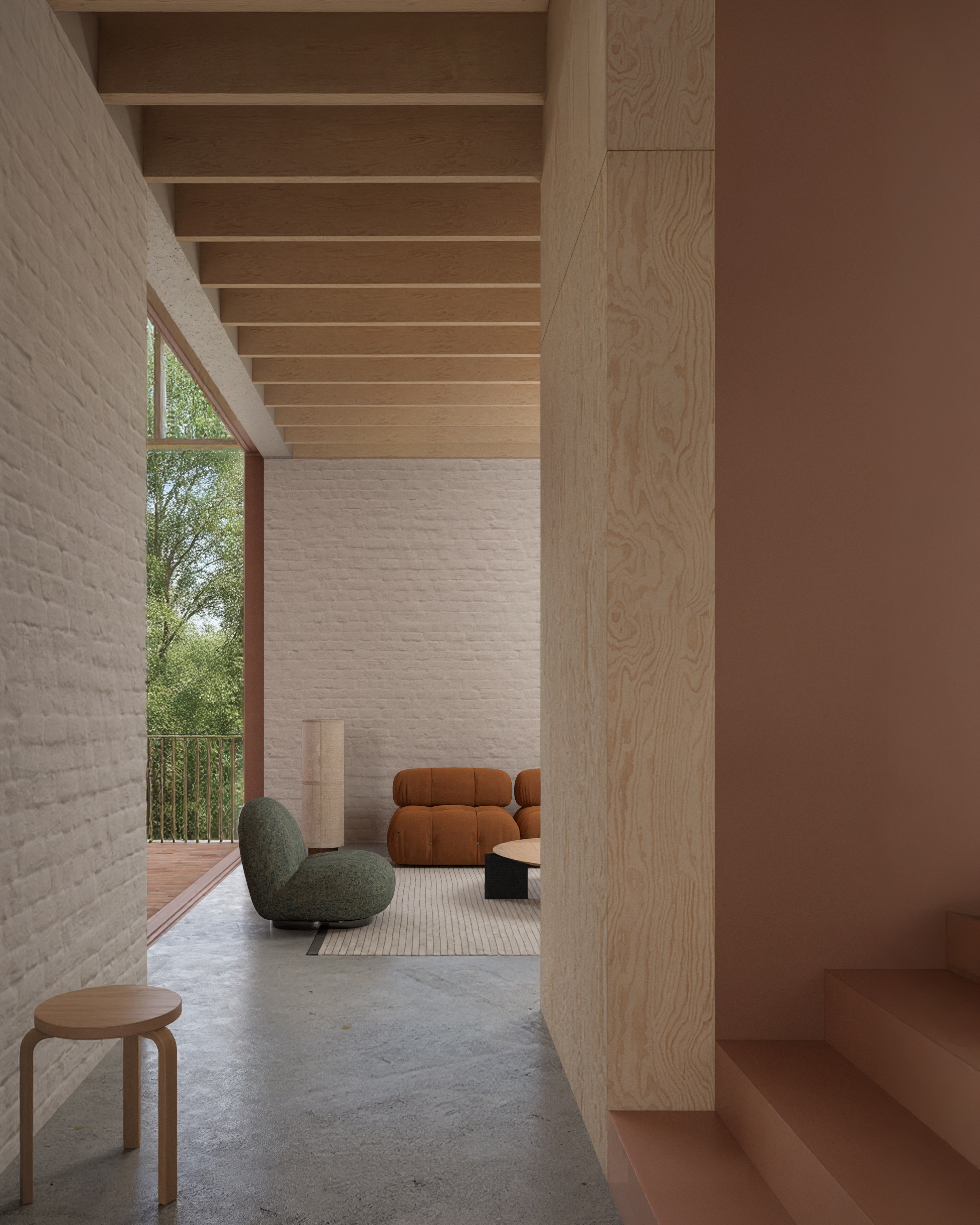
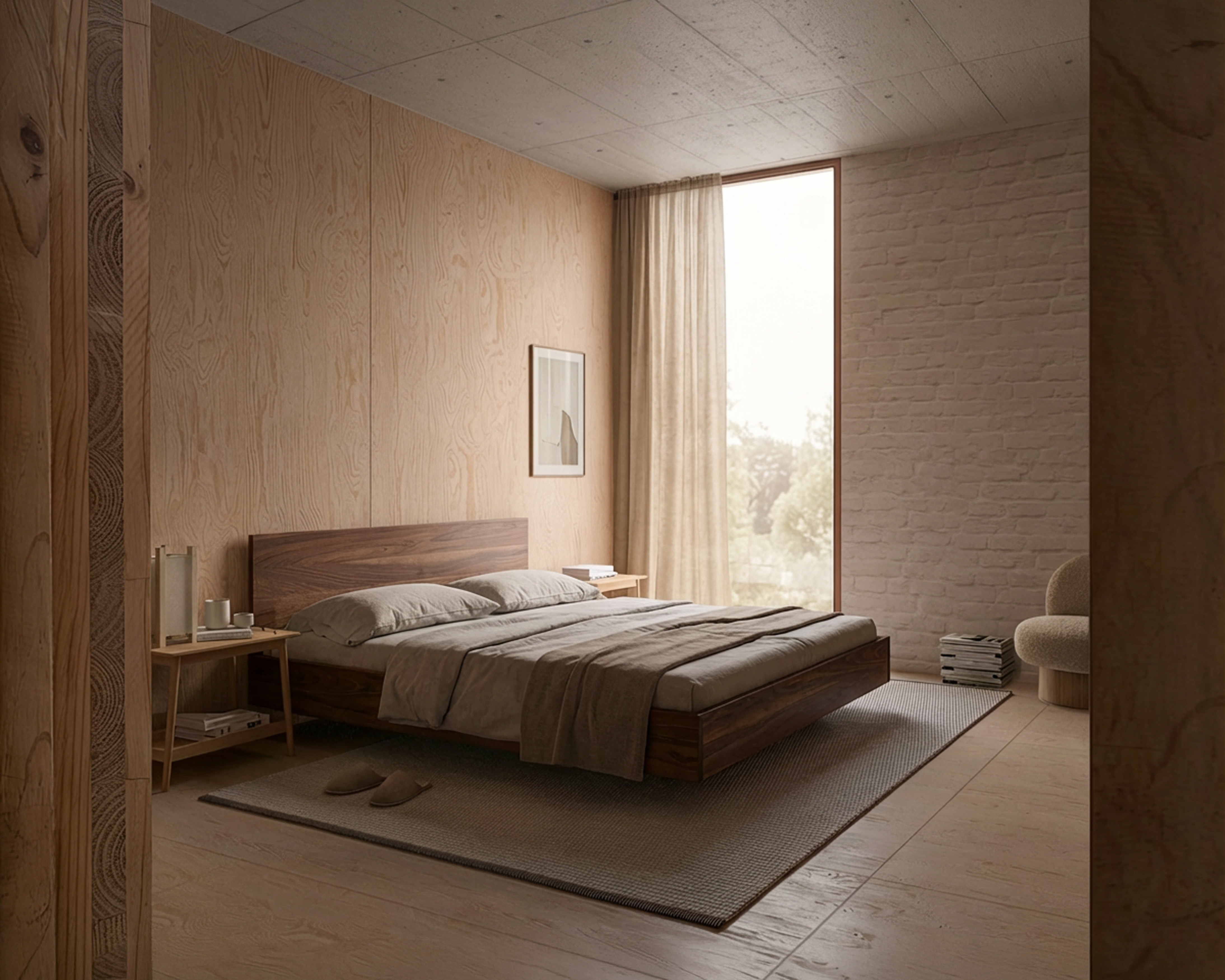
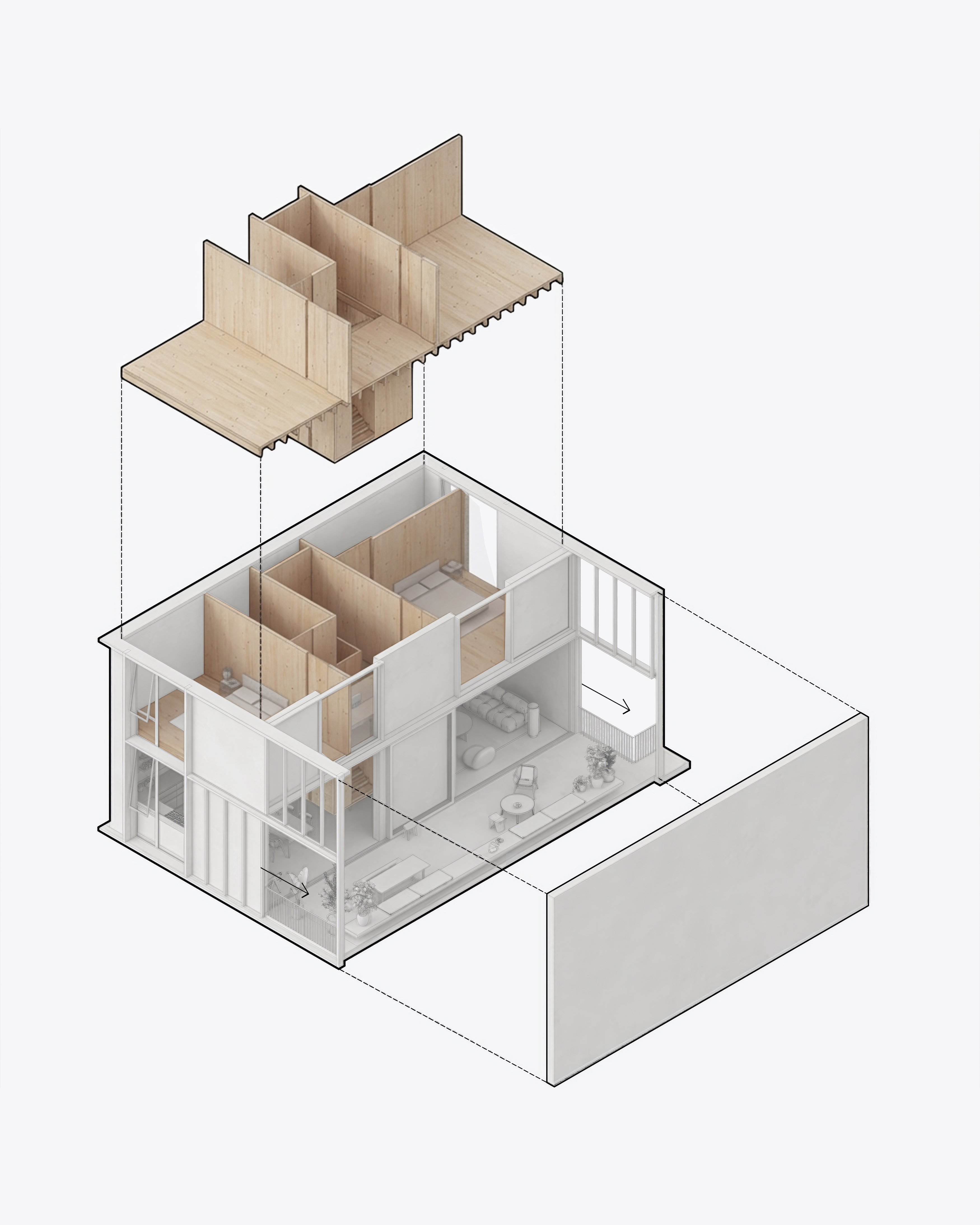
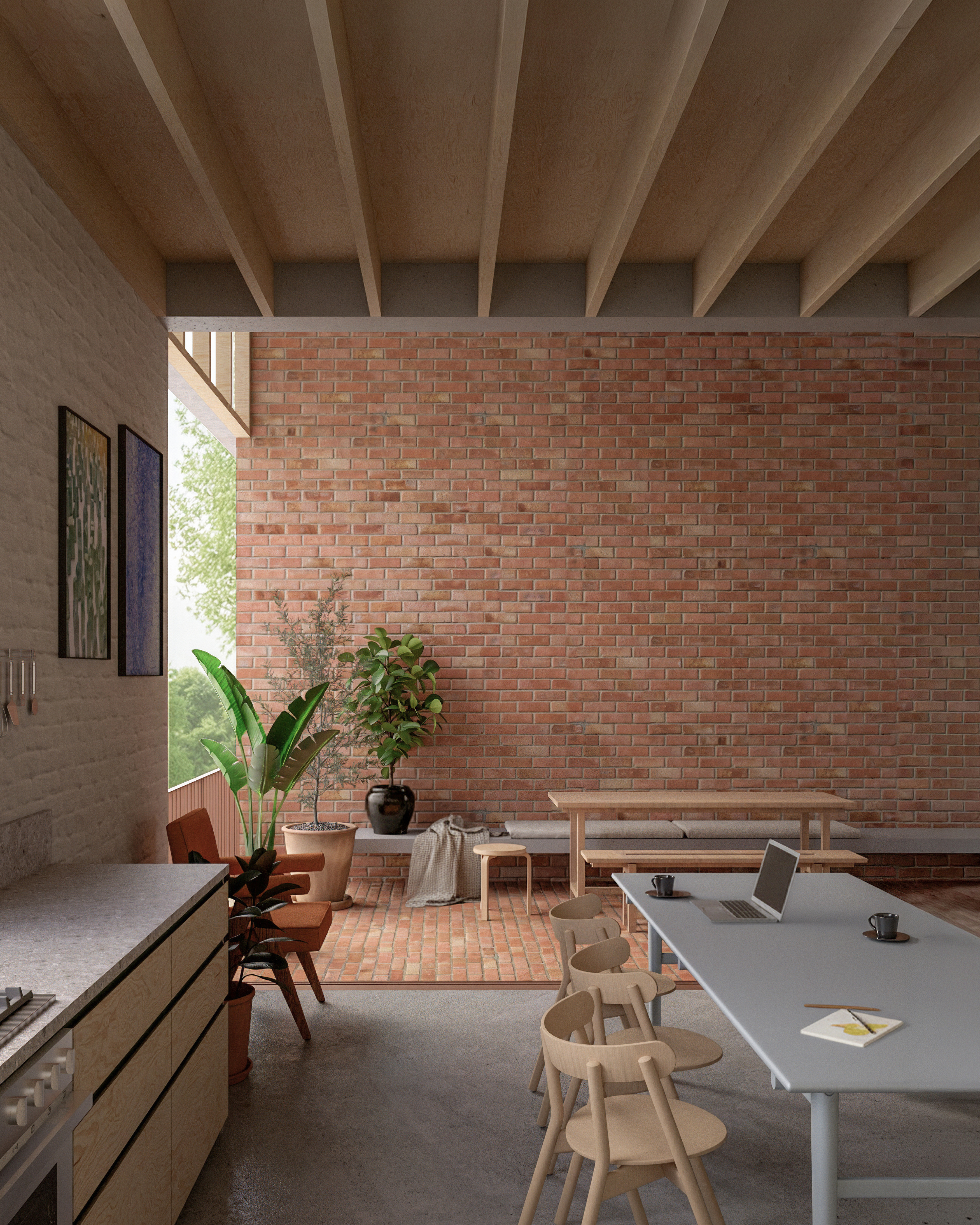
The apartments are organised as double-storey dwellings, with infill floors and walls constructed from cross-laminated local timber. This timber structure captures carbon while giving warmth, tactility and a human scale to the interior. Clay brick and concrete slabs for the unit envelope are expressed and given minimal finishing. The material choices reflect a commitment to building responsibly — using systems that are efficient, expressive, and which benefit the environment and local economy.
Outside living - Patio as Climate Buffer
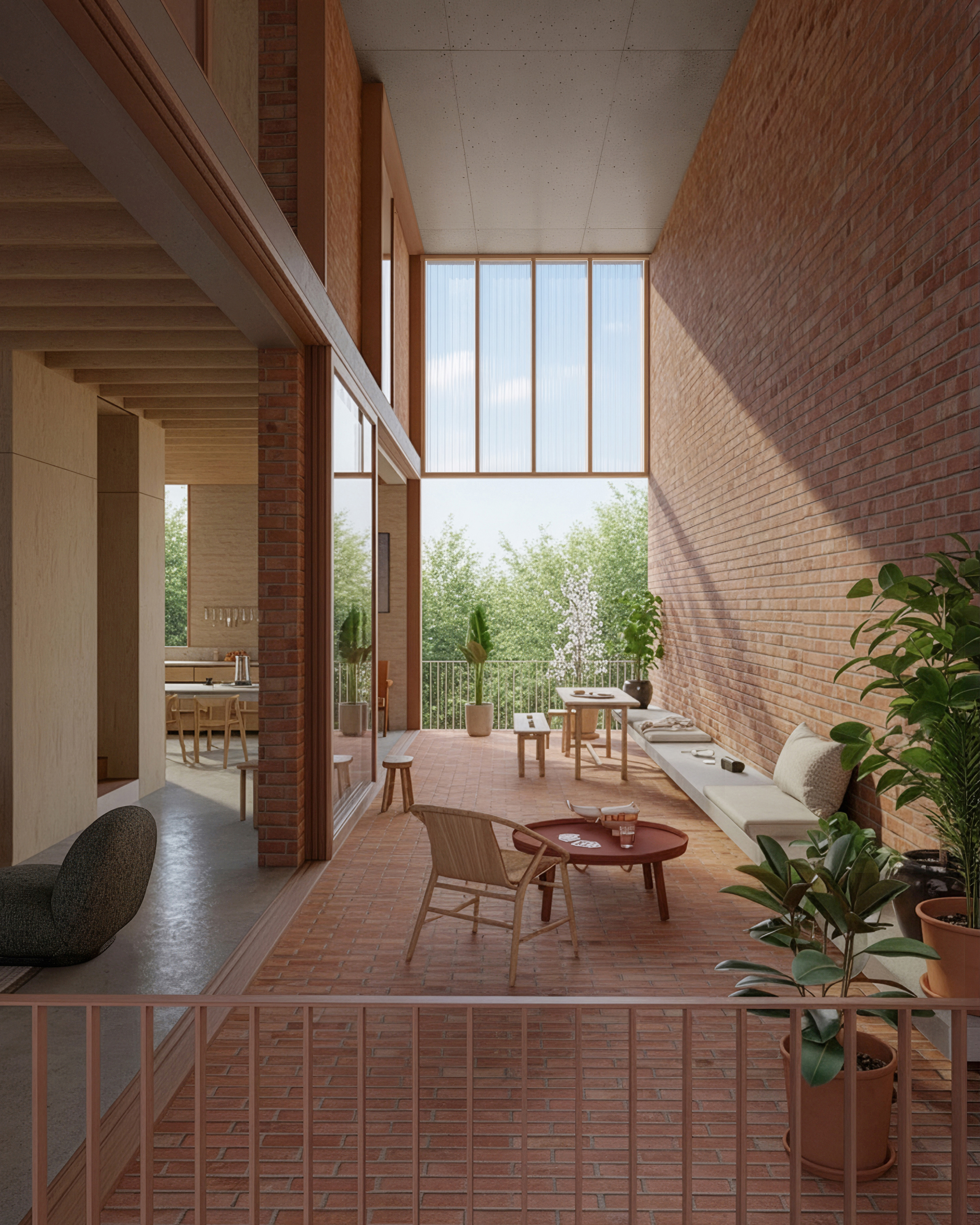
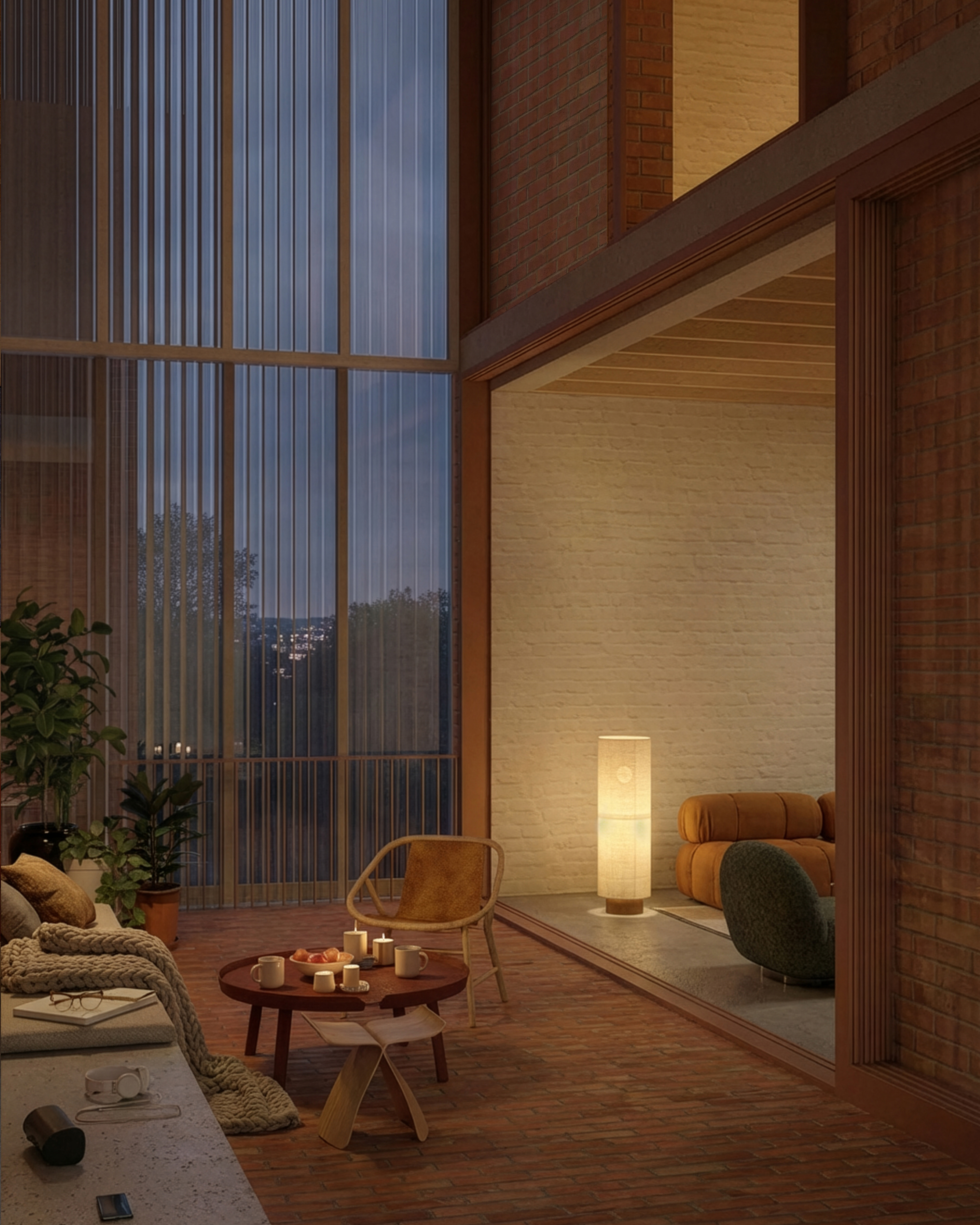
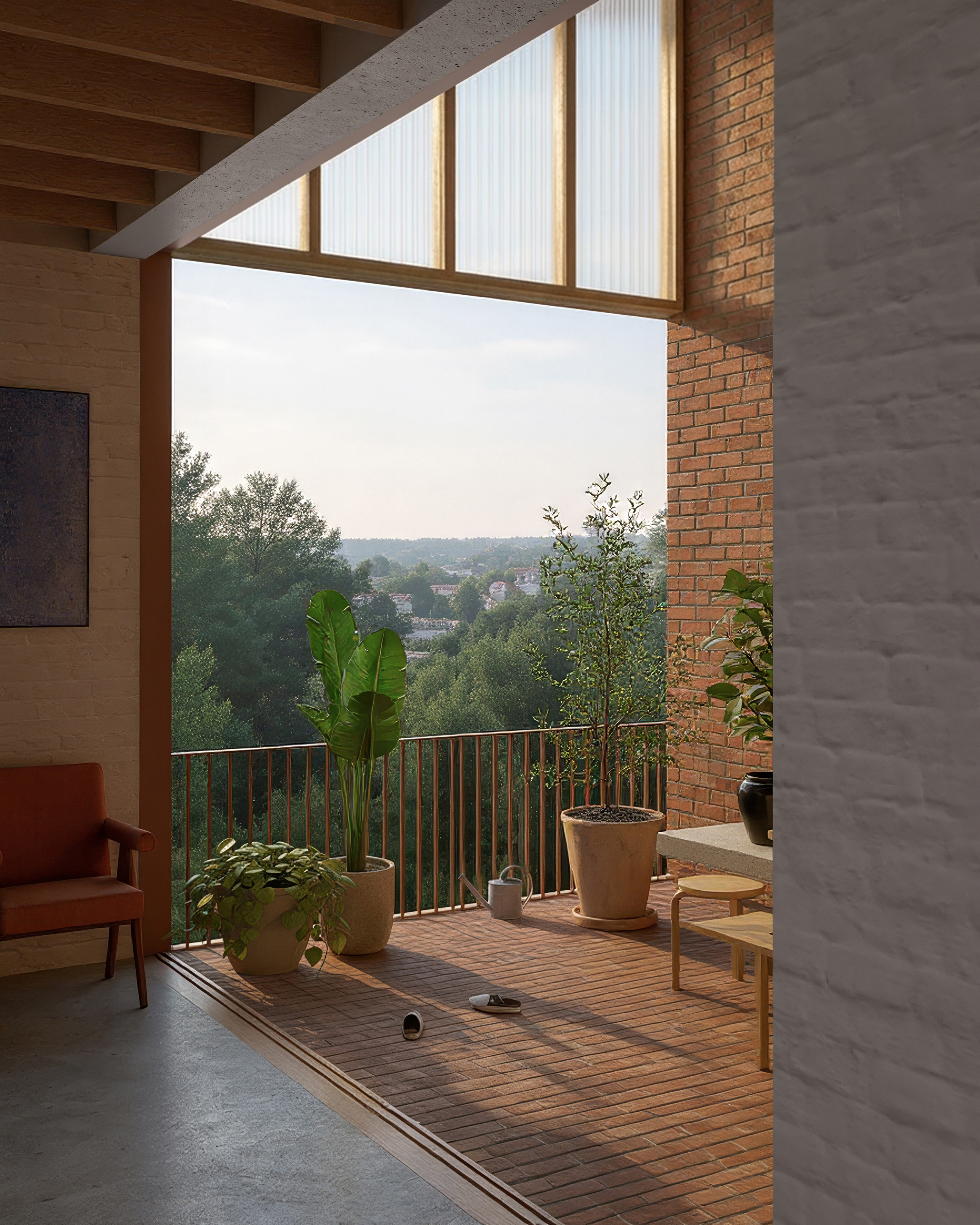
Each apartment includes a double-volume patio that acts as an indoor-outdoor room rather than a conventional appendage. This patio space can be opened either end to be an outdoor space or closed off with large sliders to become an additional interior space when needed. The inner living spaces can be extended into the patio or be sealed off from it. Acting as a climatic buffer, the patio regulates internal apartment temperature by providing air volume, shade and breeze in summer or trapping the sun’s heat in winter. It allows the apartment to adapt to seasonal changes and expands the sense of habitable volume without increasing enclosed floor area.
Adaptability Over Time
The layout already allows for different configurations with just a few subtle moves — you can choose two large bedrooms, one large and two small bedrooms, or a large bedroom with a study and a smaller room. The apartment also includes a shared workspace at the stair landing on the upper level, comfortably seating two people. In addition, the internal double-volume space allows the possibilty to add on new rooms into the volume.